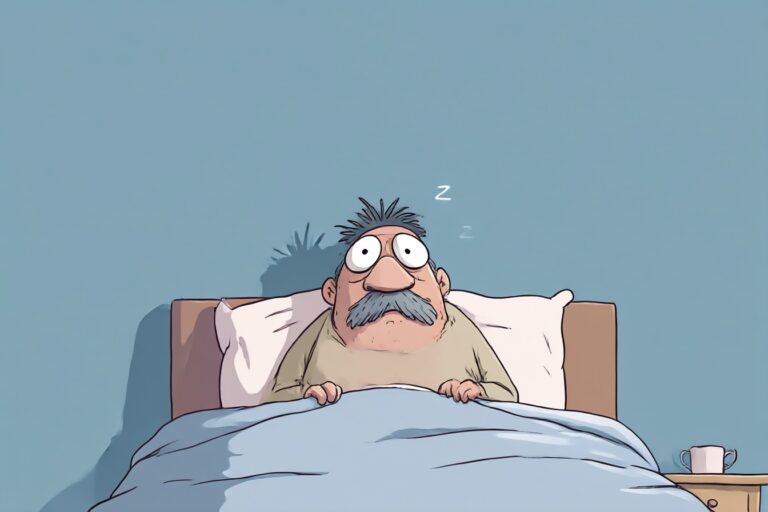

Sleep has always been weird for me. Not insomnia weird—I’ve struggled with that too during my most intensive bouts of experimentation—but ontologically weird. You see, I’m a scientist.
I like to know how stuff works.

Yet every day I spend about a third of my life unconscious. I sat upright in bed on Tuesday around 3: 17 AM staring into darkness, gasping for breath.
I thought I had taught an entire course of biochemistry to an auditorium full of plants. It took me several minutes, panting, to realize that no, I had not actually taught an entire course on biochemistry to an auditorium full of plants. I felt like I’d been ripped out of… somewhere.
“You scared me,” Mei murmured from the doorway. I was jotting down notes on my fingers. “Nightmare?” she asked groggily.
“Not a nightmare,” I mumbled. “A rip in the space-time continuum.”
And that’s when it occurred to me: what if sleep isn’t turning our consciousness off? What if it’s shifting it elsewhere?
Everybody knows what happens when we sleep, right? Your brain goes through five phases of REM and non-REM sleep. Your neurons fire in different patterns, depending on the stage.
Memories are stored. Metabolites are cleared. Tissues are repaired.
During REM sleep, your brain stem basically shuts down your motor neurons so you don’t act out your dreams. All tidy. But wait… consciousness.
We don’t know what that is! Sure, sure, we think we understand it. Neuroscientists can pinpoint activity patterns that correlate with consciousness.
They can even dim specific parts of the brain and watch aspects of consciousness darken. But we don’t understand consciousness itself. What it is, where it comes from.

Okay, so what if sleep isn’t turning off our consciousness and transporting it to another dimension? Hold up. Before you congratulate yourself for getting smarter than me by not falling for this silly idea, let me clarify: my therapist says I have a mild dissociative disorder.
Josh spit out his latte when I told him this theory over breakfast. (“Don’t even ‘MAXWELL’ me with that shit, Kwak,” he said.) Listen, I’m not saying we scientifically know that sleep is interdimensional travel.
(Yet.) What I’m saying is that if we assume sleep is interdimensional travel, it explains a lot of weird coincidences. Dreams.
Okay, dreams are crazy. They follow almost no logic that we know of. Rules of physics change.
You can fly. People you know (and love) can die and you’re completely okay with it. Schools become farms.
Pirates attack your blood vessel vessels. You wake up back in your bed hours later as if none of it ever happened. “But dreams are just your brain figuring itself out!” you protest.
Well, explain this: my dreams often feel like they’re happening to someone else. I’m a passenger. The emotion feels so real, but I can just as easily float from that feeling and into another scene that makes just as much… surreal sense.
Quantum physics. Want to know how little we understand about how the universe works? Scientists once believed the sky was blue because it was God’s favorite color.
Try not to Google anything while we’re in the cortex. Brain activity. Our brains account for roughly 20% of our total energy output, but only make up about 2% of our body mass.
Think about that: if we’re shutting down consciousness for a third of our lives, our brain is simply firing imaginary neurons. But what if we’re using all that brainpower to visit another dimension? So, how do you prove you spend your nightsvisiting another dimension?
You know the scientific method, right? Monday night, after drinking way too much tea trying to stay awake long enough to put my toddler to bed, I began working on my hypothesis. I started simple.
Controlled sleep. Collected data. Repeat.
Actually, let’s back up. First, I read everything I could find on sleep. (Especially alternative dimension theory sleep, but that research pool is… surprisingly shallow.)
Neuroscientists don’t believe in my theory. Obviously. But sleep isn’t completely uniform.
And there’s a lot we don’t understand about how our brains maintain consciousness. Then I slept. With a notebook.
Nothing happened the first few nights. But sleep patterns establish themselves over time, right? So I made sure I was sleep-tracking every variable I could think of.
EEG readings, ambient temperature, blood oxygen levels. Hell, I googled how to build a coil to track electromagnetic bursts and strapped it to my bedroom wall just in case my brain was secretly communicating with aliens during sleep. Boy, was I sleepy the next day.
The first weird incident happened about a week into my experiment. I had a pile of data I was compiling when a sudden EEG and environmental EM spike hit, shaking me completely awake. I jumped out of bed and grabbed my notebook.
It was 3:17 AM. Three times during the night my EEG had flatlined as I shifted sleep states, and three times my EM tracker saw ? ??
at the exact same moment. Ambient electricity in my apartment can’t spike every night at 3:17 AM when I transition sleep stages. So, what else happened while I was asleep?
I dream a lot. It helps me sleep. Well, dreaming helps.
Stressing about my theories not panicking my brain into fully waking up does not. Most nights I have between three and five REM cycles, which means I hallucinate for about two to four hours every night. Fillers aren’t real words but I’m using them anyway.
You get the point. Dreams are different than real life in subtle ways. Your sense of time is stretched.
You have no fear. You assume you’re still conscious, even when you forget where you are middream. You jump when you wake up.
My dreams have become a lot more interesting knowing that I may actually be exploring another dimension every time I fall asleep. For one, I pay more attention to details. It’s not a stretch to say I’ve become religious about recording my dreams.
Within five minutes of waking up I scribble down everything I remember, quantifying emotions and describing settings as best I can before it all fades. And holy shit does it fade. When I wake up my brain scrambles info from my dreamworld into margins of my reality.
Did that just happen? Where am I again? Thinking back on my dreams the next morning is like reading bad translation text for how details change.
Second: I am zen about falling asleep. Instead of “turning off” my brain at night, I try to welcome the opportunity to shift dimensions. Sort of like life coaches encourage you to look forward to death because you’re only fearful of the unknown.
Except I’m encouraging my brain to fall asleep because it gets to go Somewhere™. Lastly, I noticed I’m enjoying the hypnagogia more. Falling asleep is actually kind of cool if you think about it.
That moment right when you start drifting off is when you start to feel yourself fall…and suddenly, physics don’t apply. Let yourself drift off. Try it next time you lay down.
Anyway, back to my discoveries. OK, so how’s my theory going? Am I living in the Matrix now?
Bear with me on this. You’re getting the delicious conclusions for free. Most nights I fall asleep within twenty minutes of laying down.
My brain knows sleep is good for it; it’s ready to recharge when I give the OK. Within those twenty minutes I’ve started to explore every sensation of falling asleep. It’s like my brain is s l o w l y simmering itself off the boil.
As I lay in bed each night I become acutely aware of every sensation. My breathing evens out. My heartbeat synchronizes with my breath.
My body temp drops ever so slightly. My neurons fire away, searching for that sweet release of unconsciousness. But something happened over the last week.
I started really noticing how my brain seems to go limp as I fall asleep. One night, as I lay there noticing my heart sync up with my breath, I did the craziest thing: I stopped it. Panic flooded my body, and suddenly I was wide awake, heart pounding, nightlight casting shadows around my room.
“Holy shit,” I whispered. My heart slowly began to decelerate back in time with my breathing. “What’s wrong?” Mei yelled from downstairs.
I pinched myself. “What the fuck, Jamie?” she groaned, rubbing her eyes as she climbed up the stairs. “It’s just… tired time.”
“Do you know what I just did?” I asked, eyes wide.
“I stopped my heart.”
Mei came over and patted my arm. “Remember how you told me about sleep tonight?”
“Mmhmm?”
“I was thinking about it all day,” she said. “About this other dimension you’ll be exploring toni-night.” She winked.
“But like, for real, what if you could control it?” I said. “What if we could learn to stop our heartbeats voluntarily?” I remember snapping my fingers furiously.
“Keep our lungs inhaling and our hearts from beating!”
She hugged me.
“That’s quite the dream for your first night in the other dimension, isn’t it?”
Maybe sleep isn’t shifting me to an alternate dimension. But it sure as hell feels like it sometimes. Where do you think you “are” when you sleep?
Leave me a comment below! Originally published on Quora – https://www.quora.com/profile/Jamie-Kwak/answers.

0 Comments