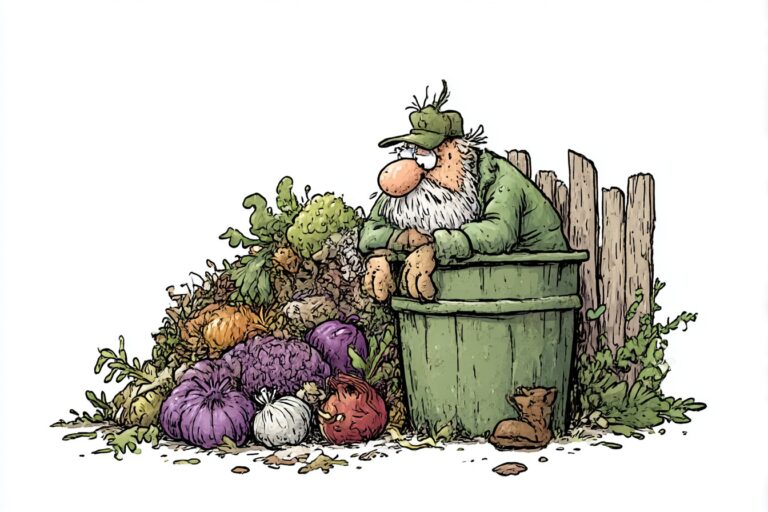

It began innocently enough. Why waste food when you can compost it? Before I go on, let me just say that I consider myself to be a composting aficionado.
Browns mixed thoroughly with greens, decomposers attended to by-products of decomposition—you get the idea.
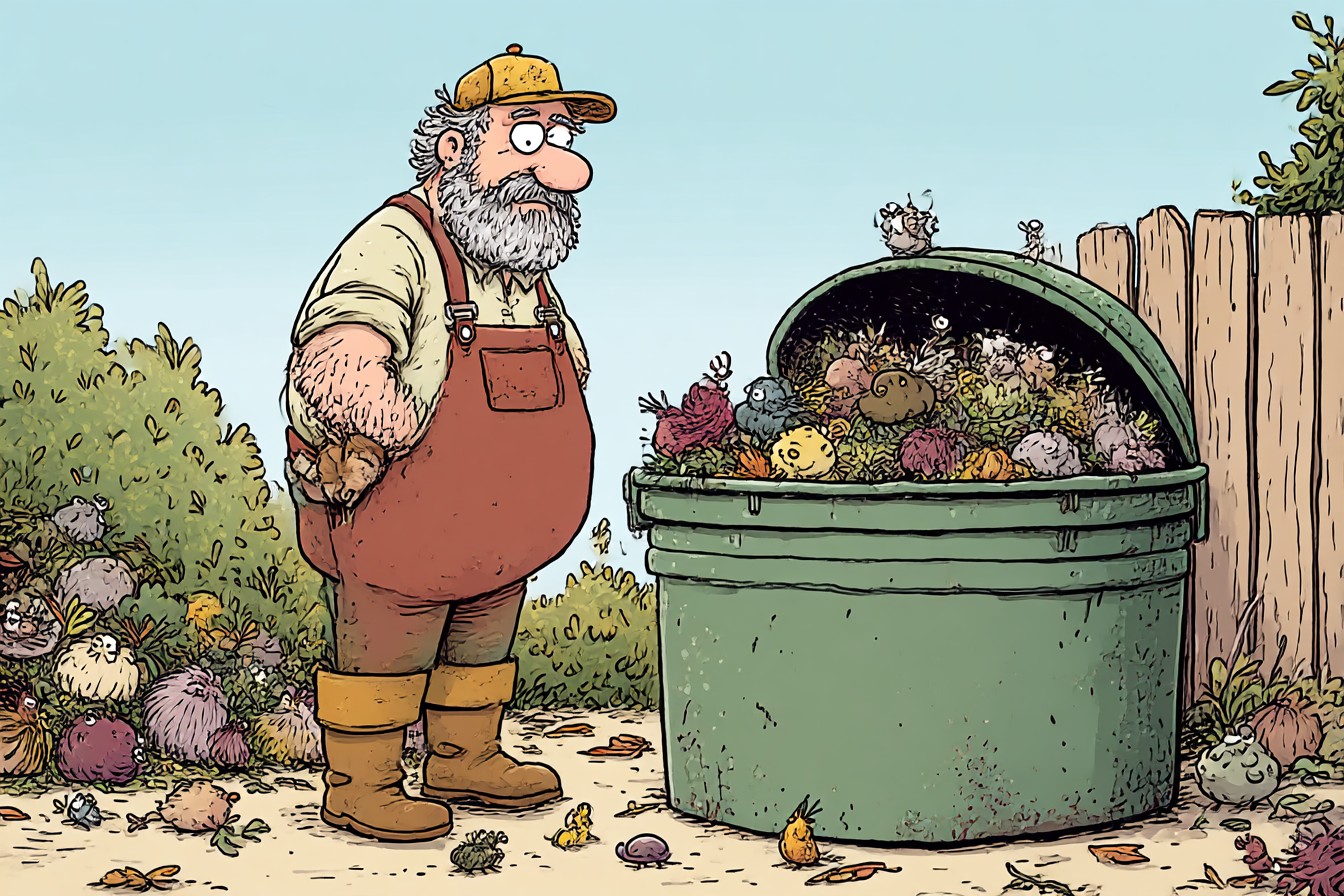
Composting is hardly rocket science. Feed fruit flies and they’ll multiply until the container is overtaken with their buzzing presence.
Feed microbes. Expect greatness. Little did I know I’d soon be breeding new life forms.
Two and a half months ago I started tweaking my compost bin. Nothing crazy. Just trying to fine tune the process as much as possible.
I mean, shoot… I couldn’t just do something the normal way, could I? Sure, my compost was breaking down just fine on its own. But if I could just make a better environment for microorganisms, couldn’t I increase efficiency?
The more I thought about it, the better the idea sounded. By combining several different composting methods, surely I could come up with a master blueprint for the ideal decomposer environment. Really… where did I go wrong?
I think upon reflection the answer is clear. Science is controlled by changing one variable at a time. Not seventeen.
My first alteration was simple. I began throwing every organic refuse I could think of into my pile. K-chow scraps (coffee grounds, veggies, eggshells), of course.
But also spent grain Josh gave me from brewing beer (hello carbohydrates and proteins), some sea weed from our beach trip last month (yes, it was still salty seawater- about 3.5% salinity after I checked with my handy refractometer. ), oyster shells I ground up for calcium and… hmm what else? Ah!
Funky fermented kimchi from my failed lacto fermentation experiment. Mei made me throw out the kimchi because “it started breathing.” Gross though it was, the rhythmic expanding and contracting of the lid should have clued me in that it was a science miracle waiting to happen. Oh and before I forget… my compost bin is a 75 gallon rotating tumbler out in the alcove behind my apartment building.
Originally my landlord said he didn’t want it there “after what happened last time” but I broke him down with a 47-slide PowerPoint presentation on composting and a notarized letter from me swearing I would never again burn the building down with my science experiments. Anyway…things went great for the first six weeks. Temperatures hit a nice 140°F (hello wifi-connected digital thermometer!

), measurements were decreasing as expected, and I was rotating said drum every three days. Couldn’t have asked for a better degradation process until…
About a week ago I noticed small globs of gelatinous slime clinging to the sides of the compost bin. At first I thought they were slime mold.
After all slime molds ARE cool as hell and definitely qualify as borderline scientific miracles considering they can do all the crazy collective feats they do with NO BRAINS. But these… these things twitched away when I prodded them with a stick. Slime mold don’t do that.
Snagging a sample with a tong, I deposited the thing into an empty mason jar and ran back inside to continue my analysis in the safety of my own kitchen (okay, our kitchen. Which also serves as my ad-hoc microbiology lab since Mei got me that stupid sign that reads “The Place Where Good Dinner Parties Go To Die” after I set up shop). Examining it under my trusty microscope (gift from some hapless Greenville County public school’s thrift shop), things immediately looked off.
“This can’t be real life,” I whispered to myself as I focused the lens. The organisms seemed to have characteristics of both prokaryotes and eukaryotes. Were membrane-bound structures?
Sort of? But their nuclei? Non-existent.
Depending on the angle I was looking at, some appeared to share genetic material with neighboring cells via unholy tiny tubules. Days of research, primitive DNA sequencing, and mild obsessive behavior later led me to the only conclusion I could think of. Dr.
Sanjay Khatri. Former PhD advisor of mine who somehow managed to both love AND hate me after “that incident” our last year in the lab. Fortunately for me he took my call.
“So Jamie,” he deadpanned after what felt like hours of silence studying the sample via Facetime, “please tell me you have been exercising SAFE practices with this thing.”
“What do you mean?” I replied laughing nervously. “I… exercise safe practices?”
He stared at me like I was gargling battery acid. “These freaks of nature are showing signs of multicellularity.
Organized. Communities. That’s not safe, man.”
Fair point.
“Did you feed it anything weird?” he asked, completely ignoring my previousoutburst. “Uhh…” Wait. What did I feed it lately?
“Sea weed,” I suddenly remembered, panic rising in my chest. “And kimchi.”
“Fuuuuuuuuuuuuuuuck.”
And then it hit me. Remember how I said things multiplied exponentially when you fed fruit flies?
Multiply that times a thousand with these things. “How big are they now?” Dr. Khatri grunted, snapping me back to attention.
I gulped, doing the mental math. “Probably basketballs by now.”
“No way.” He typed furiously into his phone. “The post office’s still open, right?”
Fast forward several hours and I had vacuum sealed the ENTIRE compost bin into Cryovac-style bags (thanks Ben for another disgusting use of your chemistry knowledge…) and rushed them over to Dr.
Khatri’s office to be properly stored. Preliminary results from his analysis are in and y’all…. I am officially breeding a new form of life in my compost bin.
Somewhere between fermented cabbage and salt water these pseudo-bug things acquired genes that allowed them to become… something else. I’m not even sure what to call them. They look and act like no known organisms on this planet.
At first I thought they were possibly bacteria from what I could see under the microscope, but it’s gotten to the point where they’re doubling in size every DAY. Combine that with how efficiently they consume our trash and organize themselves into clusters and you’ve got yourself a bona-fide little beast. I’m not even kidding you guys.
Dr. Khatri’s team has completely isolated them and ran full genomic sequencing. The consensus is we are NOT dealing with bacteria, fungus, or even protists.
They’ve tentatively christened them Maxwellium compositum until a proper scientific paper on the discovery is published. Dr. Khatri even grinned and waved at me as he uttered those magical words.
I died and came back alive just a little bit more. Now don’t get me wrong. Part of me is freaking THE FUCK OUT because of what I may have created back there.
But the other part of me? The side that’s spent way too much time reading old science journals? It’s thrilled because what we have here is unprecedented.
Could this be natural selection at work? An accelerated evolution brought on by the seemingly unrelated collision of microorganisms combined with gene-rich kimchi soil and salt water? It doesn’t take a scientist trained at the CDC to realize this should NEVER have happened.
But it did. And now we have freaking LIFE that we cannot identify with the tools already at our disposal. God bless science.
Oh and PS- I started composting again yesterday. This time in a sealed bucket lined with Trash Bags® brand black garbage bags. Someone had to continue our little science project and it might as well be me.
It’s safe to say I’ll be taking that apartment complex’s compost bin business VERY seriously from here on out. As a bonus, I’ll be able to monitor strangers’ trash and evaluate how different food waste affects the growth of our new found buddies. Hell, maybe I’ll make a killing offering “compost consultations” to gardening centers across the country.
Wait.. that’s actually terrifying to think about. THE MOST disturbing part of all this?
On a whim, I started googling random gardening forums to see if anyone else had noticed weird slime-like blobs appearing in their compost piles. Apparently so. Across THREE continents people are my reporting patchy, non-fungus slimy accumulations in their compost bins.
Most dismissing it as “weird mold” or “that new breed of slime mold.”
Funny you should say that. Someday I’ll be rich off insane compost bills. But until then I’ve taken to messaging random strangers in the hopes they’ll send me photos of their disgusting little found growing in their backyard ecosystem.
Dr. Khatri thinks I’m paranoid. Then again he also got his graduate students working on genetic analysis and has sent out mass emails to microbiology departments all over the world.
So what does he know? Still though. What if we’re accidentally creating new organisms all the time?
If SOMEONE out there is composting and it’s not mutating into adorable sentient beings… who’s to say the same exact thing isn’t happening in YOUR kitchen sink right now? Plant shit mixes with coffee grounds. Food scraps get blended into blenderized envivos coupled with calcium carbonate stands and Epsom salt.
People.
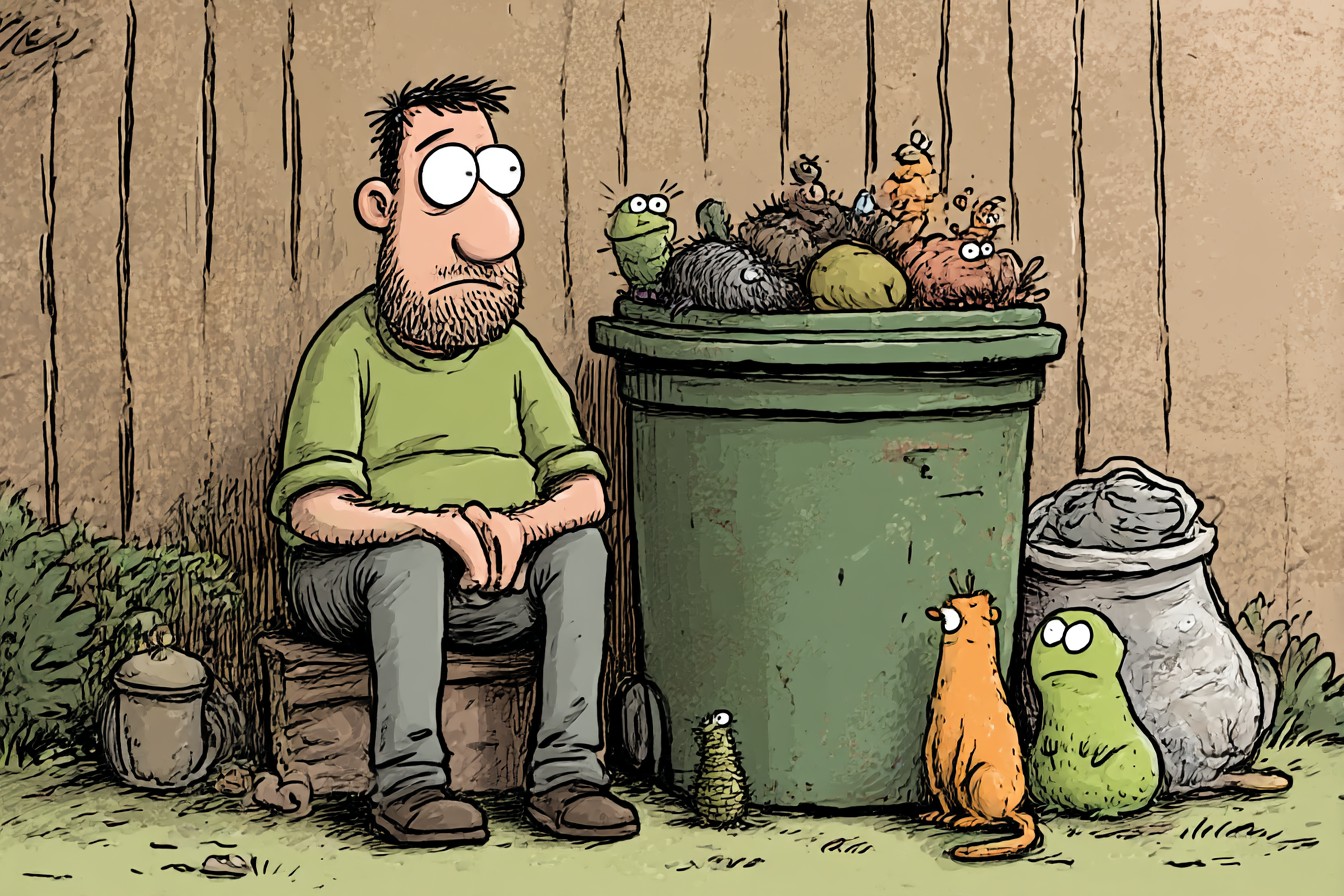
We are creating the perfect breeding ground for the next dominant species on this planet and we have NO IDEA. Mei has made me sign a formal contract banning me from “doing science” in our kitchen until further notice.
You’d think torturing graduate students was worse than making alien life but I guess psychology majors just have it out for me. FUCK yeah science. Compost On.

0 Comments