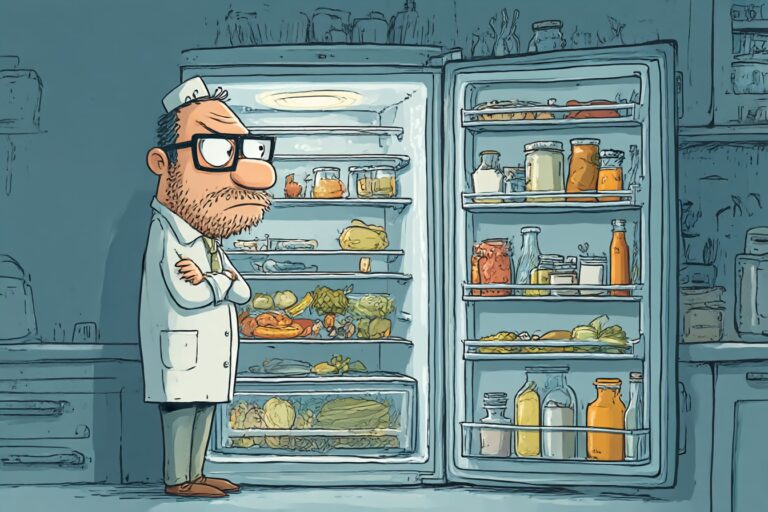

It started with strawberries. Perfectly innocent strawberries. Fluffy, temptingly pint-sized strawberries that would rot inexplicably before their time in my refrigerator’s bottom drawer.
Even when I was diligent about rotating my berries – moving the ones from the store to the drawer’s back, as you’re supposed to do – those babies just sat there mocking me, getting fuzzy while the stragglers I’d neglected on the middle shelf stayed fresh week after week.
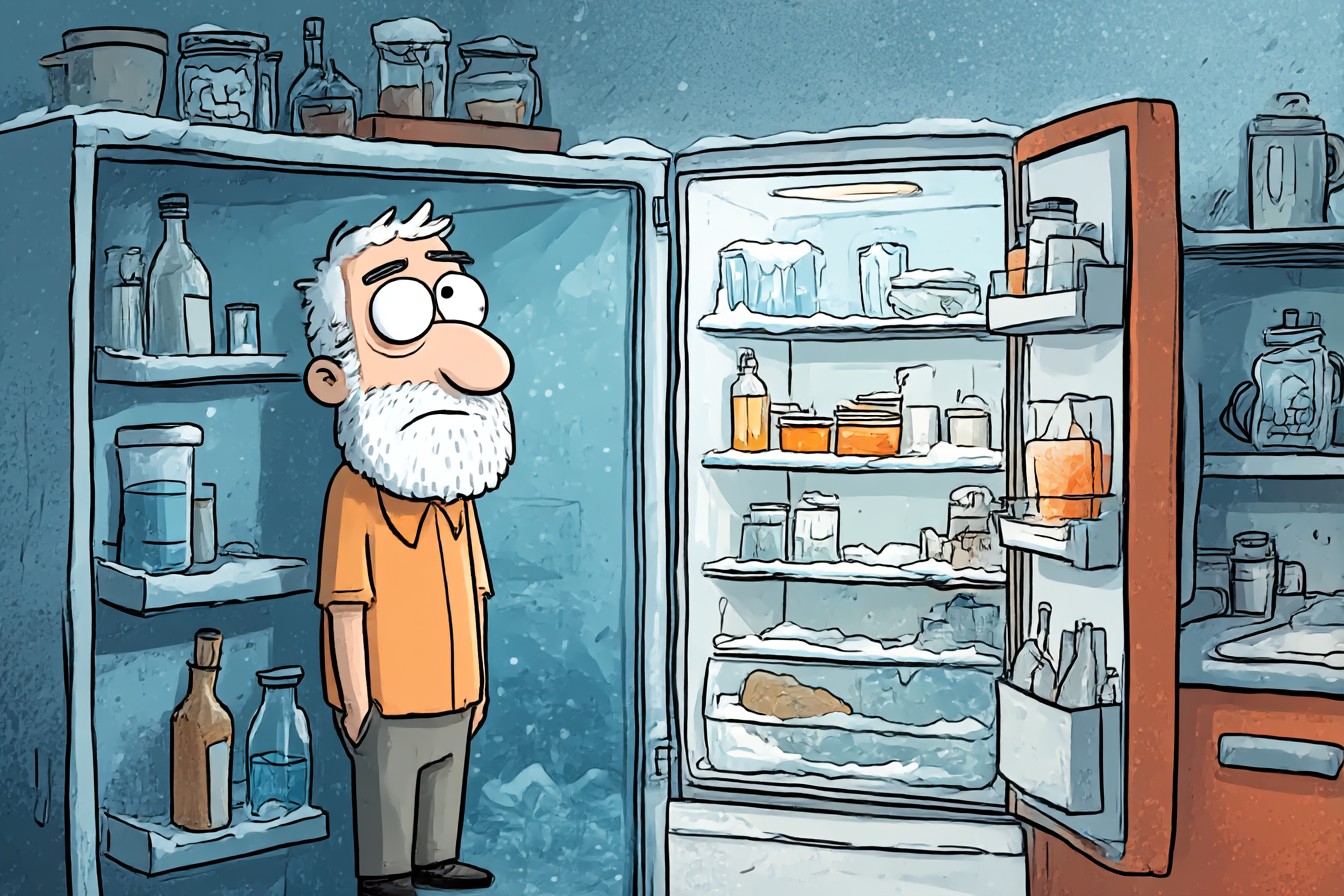
I tried to convince myself it was just science. Refrigerator science.
Cold air pools at the bottom, hotter air rises, that sort of thing. But then my yogurt started setting up residence in different consistencies based on where in the fridge I left it overnight. And butter.
Good lord, did I ever underestimate butter. It’s always a semi-solid in my fridge, no matter where I put it or what setting I use. Listen, I’ve done some weird experiments in my apartment over the years (the Great Mold Invasion of 2021 still has my landlord whispering behind my back), but charting airflow patterns in my refrigerator was not supposed to be a months-long endeavor.
It was supposed to be something I looked into… and then looked away. Like most of my scientific pursuits. About 36 hours.
“I’m just going to measure the temp in different places,” I told Mei as I began fishing for wire thermometers and hygrometers through my supply closet drawer of miscellaneous science project paraphernalia. Mei looked up from her laptop, where she was working on what I could only describe as digital string theory, her eyebrow quirking in that way it always does when she’s trying not to calculate how many therapists this experiment will eventually require. “In different areas or different locations?” she asked.
“The former. You know, top shelf, middle shelf, bottom drawer. Possibly the door.” In my head, I was already scheming out an exponentially more complex data collection process, but there was no need to concern her with that.
Thirty minutes later I had fifteen strategically placed digital temperature and humidity sensors dangling from my fridge shelves. I hadn’t slept since the day before. Between me trying not to knock them all over with my kitchen expeditions and constantly refreshing the data spreadsheet, the preliminary information alone was fascinating.
Three spots on my middle shelf alone had temperature fluctuations of nearly 7°C. The humidity variance told me I was storing my food in a freaking rainforest compared to the Sahara Desert depending on where I placed it. I wasn’t just storing food in my refrigerator, I was creating my own unique climate with weather patterns and eco-zones.
Which was enough data to launch Phase II. “I’m going to need to empty your fridge,” I announced over Mei’s bleating about how we JUST STOCKED IT TWO DAYS AGO. “And destroy any potential evidence that we buy groceries?” she laughed.
“Yeah, basically.” Mei ended up helping me (she loved the little numbered flags I tied to my fridge shelves with fishing line to map out a primitive x, y, z coordinate system), and we both spent the better part of that night filling empty water bottles with rubbing alcohol (to provide some counterbalance), carefully placing them throughout my fridge, and scribbling down every relevant variable we could think of. Hourly, I woke up to record temperatures and humidity levels and watched as my fridge revealed itself to me. Degrees shifted by the minute in different locations.

Patterns emerged. Predictability that I was determined to quantify. After nearly a week of coming and going from my kitchen like some crazed refrigerated Edward– my spreadsheet boasted information ranging from dew point to seasonal variances – I felt like I had a pretty good grasp on the science of our fridge.
For starters, there were five temperature ranges inside that beast, none of which were consistent with what I intuitively thought they’d be. Take my crisper drawer, for example. Despite being the official942 Repository of Produce, its temperatures wildly fluctuated during the day by close to 4°C.
Who knew? Not only was half of my lettuce inevitably frozen when I went to use it, but the other half would go slimy in record time because apparently the juicy magic that keeps greens crispy likes to party it up right around the same temperature at which we tune our refrigerators. Side right of middle shelf, on the other hand, was a very different story.
“What,” Josh asked when he found me kneeling on the floor between my fridge and freezer, notebook in hand, softly chanting about thermal boundary lines. “Is your excuse for skipping game night?”
“It’s beyond excuses at this point,” I groaned, tossing my headset at him. “My refrigerator is a climate disaster area!”
He arched a brow.
“Uh-huh.” He picked my headset off the floor and spun it between his hands. “How long has it been since you slept?”
“Two weeks.” Damn it, Josh. Way to shoot me down immediately.
“You don’t understand, Joshy. Our refrigerator is created of five separate ecozones.”
He looked at me blankly until I gestured to my laptop, where MATLAB had spat out a rough 3D image of our fridge based on my raw data. There it was in all its glory: a complete topographical, climate-controlled dreamscape of everything we’ve ever owned stored inside rectangular white cooling magic.
And do you know what I discovered? “The door is its own climate!” I cried, jabbing a finger at my projection. “It fucking EXISTS in a different thermodynamic realm than the rest of my refrigerator!”
He raised an eyebrow.
“Uh-huh.” He wandered back over to me and I could swear I heard him snort. “How long ago did you sleep?”
It’s been almost two months since I started quantifying everything about my refrigerator, from airflow patterns (“Could you not lean against the fridge AGAIN while I’m trying to take data? ?” sorry, Mei) to draft shadows created by my vegetable drawer.
I mapped out its seasons (summer, by the way, is when the compressor decides to run for a really long time, creating a high pressure zone around each cooling element). I calculated thermal transfer rates for leftover Tupperware versus glass containers. Hell, I even discovered what I’m now officially calling “the twilight shelf.”
The point is, I know my refrigerator.
I know how to store food in my refrigerator. I could probably give the nice people at Whirlpool a run for their money in fridge organization consulting. Our food lasts longer now because I know the secrets.
How come no one told me about fridge climates before?? ? Well, now I will.
The fridge light will come on every time you open your refrigerator door because that is how these things work. But did you know that right as it turns on is when your food gets coldest? Counterintuitive, sure, but it’s true.
That first plunge of chilled air is when your lettuce will get freezer burn and your ice cream will start to frost up. Know when to pull your groceries out. Speaking of frost…whoever invented refrigerators forgot to mention to me that some spots get iceier faster than others.
NEVER PUT YOUR CARROTS IN THE CRisper Drawer. It’s a death trap of inconsistent temperatures and wild humidity swings. Leave your carrots on the middle shelf in a wire container angled about 20 degrees toward the door.
You’ll thank me later. I know this whole “facts about your refrigerator” thing seems kind of random, but I have a whole cookbook’s worth of information I could throw at you. There’s a reason your strawberries go moldy before your bananas.
There’s a method to fridge airflow that plain olds baffles just don’t take into consideration.
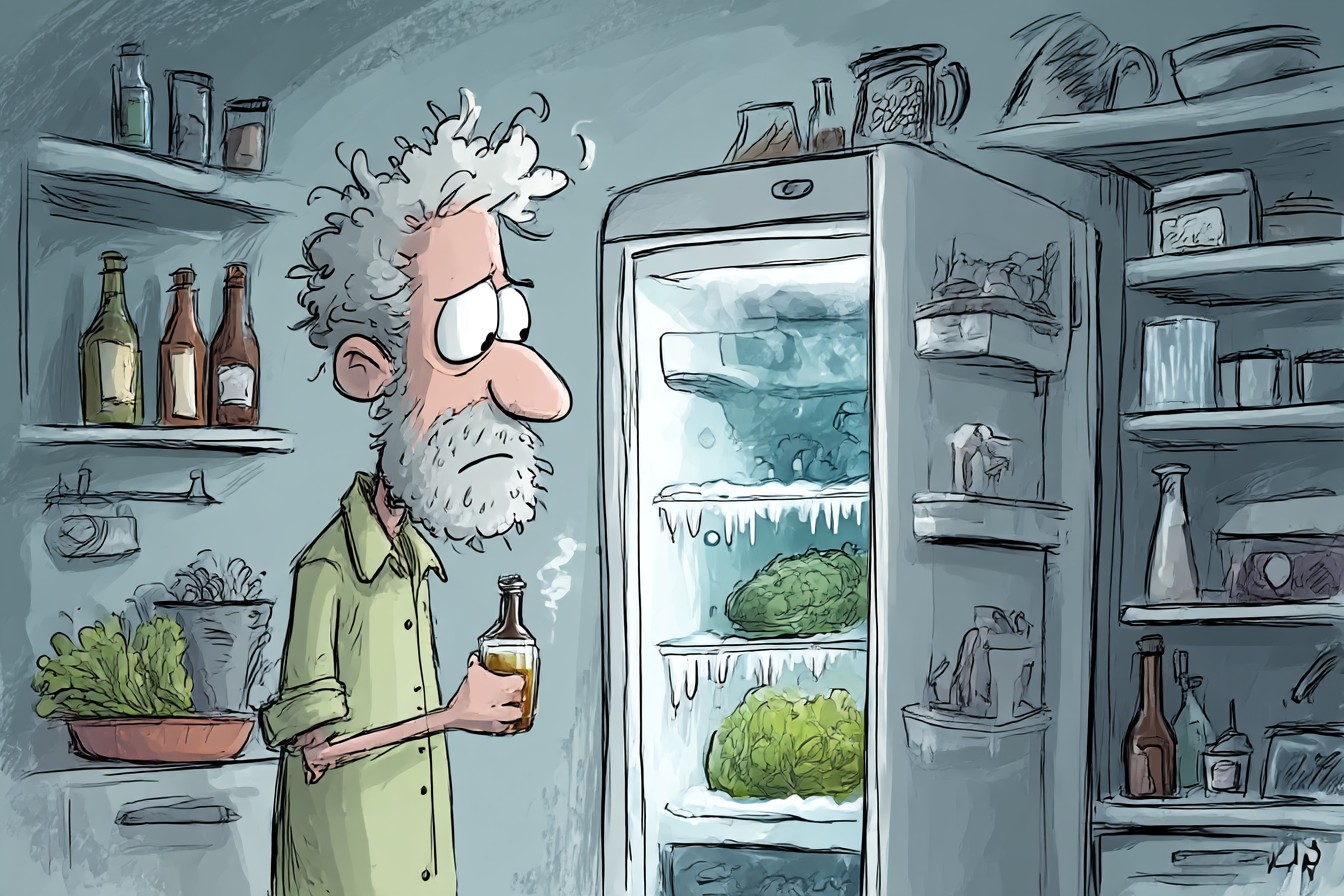
Have you ever wondered why your butter is always a hardcore semi-solid instead of nice and spreadable? I have.
So I measured it. I welcome you to the wonderfully weird world of refrigeratorscience. See you next time with more fascinating facts about that little weather machine humming away in your kitchen!

0 Comments